Very few organisations wake up expecting to have a crisis.
Most start with a problem that appears manageable.
A customer complaint
A service failure
A negative review
A software outage
A health and safety incident
The challenge is that crises rarely arrive in a form we've specifically planned for.
Business continuity plans are important. Crisis plans are essential. But no organisation can create a playbook for every scenario it may face.
What organisations can do is develop the capability to respond when something unexpected happens. That's where understanding the difference between an issue and a crisis becomes important.
An issue is a problem that can usually be managed through normal business processes.
A crisis occurs when that problem begins to threaten trust, reputation, operations or stakeholder confidence in a significant way.
The issue itself might not have changed. The visibility, impact and scrutiny have.
Here's a scenario (100% fictional and not in any way implying this has or would happen here in New Zealand)
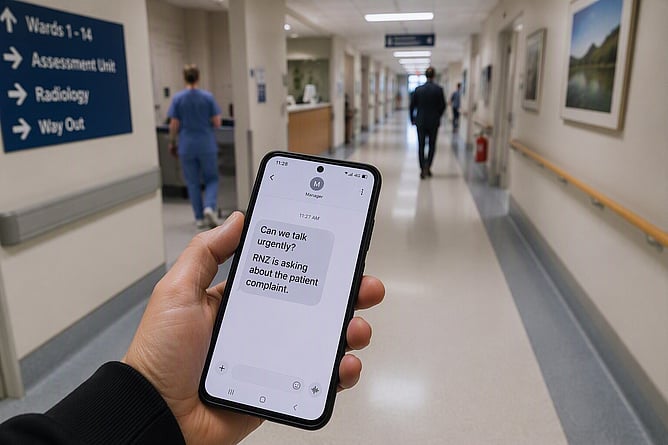
Imagine you work for a hospital.
One patient has a poor experience. Their toast had mould on it, communication from staff was poor, and their expectations while staying on the ward weren't met.
The patient lodges a complaint directly with the Director of Nursing.
Not ideal, but probably not a crisis.
Over the following weeks, similar complaints begin appearing. Some mention poor food quality. Some refer to long wait times before being seen by a clinician. Others describe concerns around personal care, including loved ones being left in soiled bed linen. A number of patients report communication issues, despite management believing the underlying concerns have already been addressed.
At this point, the hospital clearly has an issue.
The complaints are concerning, but they're still being managed through normal operational processes. Patients are receiving responses, managers are investigating concerns, and leadership is focused on addressing the underlying problems.
Then something changes.
Someone posts photos online
The images are shared in a community Facebook group with more than 25,000 members
Other patients begin sharing similar experiences
A national media outlet picks up the story
The Health Minister is asked for comment
MPs begin raising questions publicly about patient care standards
Almost overnight, the conversation changes.
The focus is no longer on mouldy toast or communication issues on a single ward.
The focus is now on whether the hospital can be trusted to provide safe, dignified care.
People start asking different questions:
How long has this been going on?
Did management know?
Why wasn't it fixed sooner?
What else aren't we hearing about?
Would I feel comfortable sending a family member there?
The original problem wasn't a crisis. The loss of confidence was, and that's an important distinction.
A crisis is rarely defined by the event itself
A crisis is defined by the impact the event has on trust, reputation and stakeholder confidence.
The mouldy toast was an issue.
The public questioning whether patients are receiving appropriate care is a crisis.
Crises are often less about the event itself and more about how stakeholders perceive the organisation's response.
The turning point usually occurs when people begin asking questions such as:
Can I trust this organisation?
Do they know what's going on?
Are they taking responsibility?
Would I recommend them to others?
Once confidence comes under pressure, the challenge becomes much bigger than fixing the original problem.
The focus shifts to rebuilding trust.
What should an organisation do next?
The first step is getting clear on the facts. Speed matters, but accuracy matters too. Organisations damage credibility when they speculate, deflect blame or provide information that later proves to be incorrect.
The second step is acknowledging concerns.
People want to know they have been heard. Silence rarely reduces scrutiny. More often, it creates a vacuum that others fill with assumptions and speculation.
The third step is demonstrating action. Apologies matter, but action matters more.
Stakeholders want to see evidence that the organisation understands the problem and is actively addressing it.
For the hospital, that might involve independent audits, changes to procedures, additional staff training, investment in systems, or regular updates explaining what improvements are being made.
The fourth step is communicating consistently. Staff, customers, stakeholders and media should all be hearing the same underlying story supported by the same facts.
Rebuilding trust takes longer than losing it
One of the biggest misconceptions about crises is that they end when media interest fades. They don't.
The operational issue may be resolved. The reputation work is often just beginning. Trust is rebuilt through repeated evidence that lessons have been learned, for example:
Customers see improvements
Staff understand new expectations
Stakeholders observe transparency
Confidence starts to return.
Every crisis is different, but the response principles aren't.
No organisation can predict every scenario it will face
The businesses that navigate crises best are not necessarily the ones with the thickest manuals sitting on a shelf. They're the ones that build a culture of accountability, transparency and clear communication, demonstrating honesty, competence and leadership. That's what protects trust when it matters most.